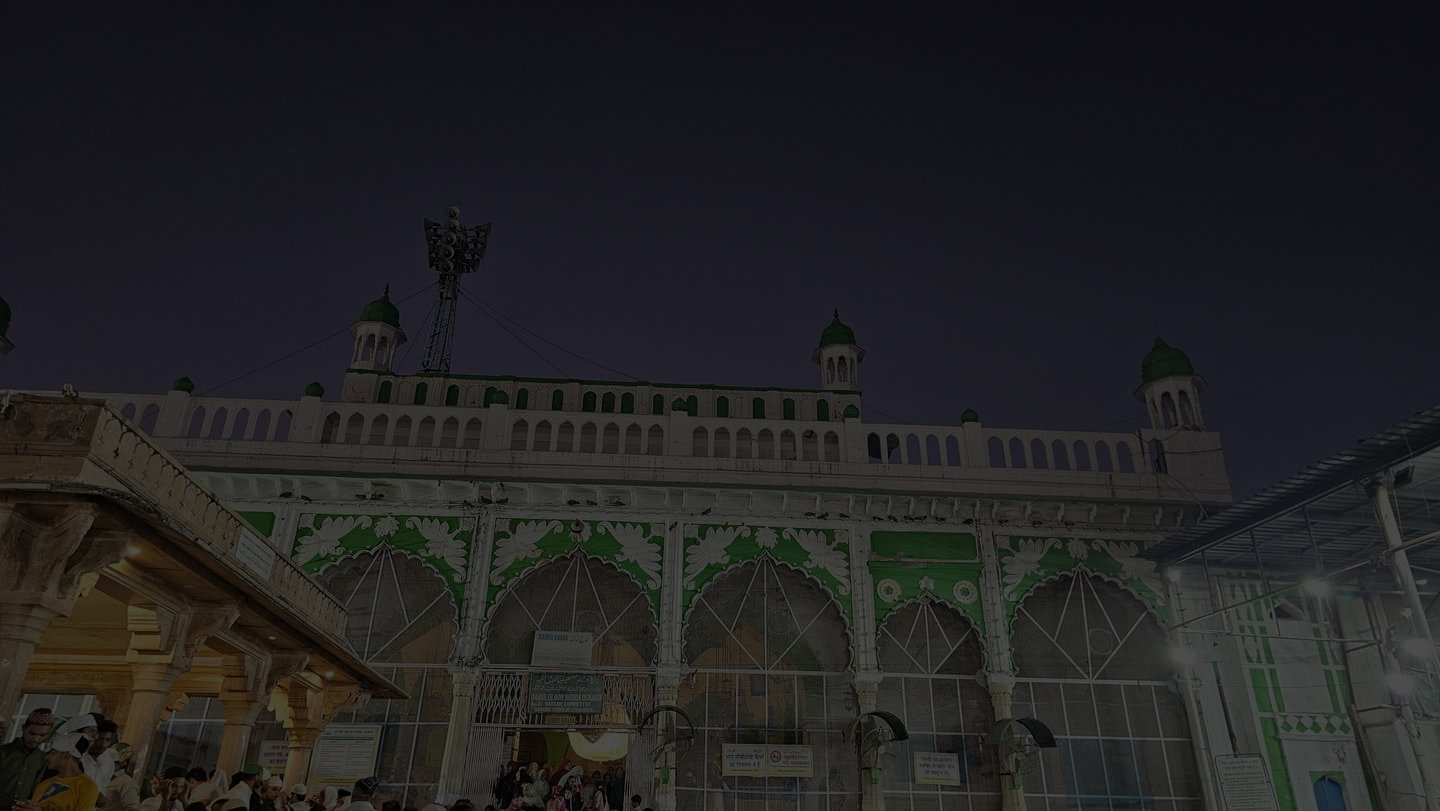
Hazrat Ab’ul Hasan Yamin al-Din Khusro (1253–1325 CE), universally known as Amir Khusro Dehlavi, rests in eternal peace beside his beloved master, Hazrat Khwaja Nizamuddin Auliya (RA), at the Nizamuddin Dargah in Delhi. His shrine is not only a place of spiritual devotion but also a beacon of poetry, music, and culture that continues to inspire millions.
Life and Legacy
Amir Khusro was born in 1253 in Patiali, Uttar Pradesh, to Amir Saifuddin (a noble of Turkic origin from Balkh, Afghanistan) and a Rajput mother from Delhi’s noble family. Orphaned at an early age, Khusro’s talent in poetry and music soon brought him to the courts of Delhi Sultans.
More importantly, his life reached its true spiritual fulfillment when he became a disciple of Hazrat Nizamuddin Auliya (RA), to whom he remained devoted until his last breath. Six months after the passing of his master, Khusro too departed from this world in 1325 CE, leaving behind an unparalleled legacy.
Major Historical Milestones
- 1271 – Compiled his first Divan of poetry, Tuhfatus-Sighr, at the young age of 18.
- 1272–1276 – Entered court service under Sultan Balban’s family, marking the beginning of his long career as a royal poet.
- 1288 – Completed his first Masnavi, Qiran-us-Sa’dain (“The Meeting of the Two Auspicious Stars”).
- 1290s – Served in the courts of Sultan Jalaluddin Khilji and Alauddin Khilji, producing celebrated works like Miftah-ul-Futooh and Khamsa-e-Nizami.
- 1301–1315 – Chronicled the campaigns of Alauddin Khilji, blending poetry with history.
- 1310 – Drew closer to his Pir, Hazrat Nizamuddin Auliya, dedicating his works and heart to the Sufi path.
- 1316–1321 – Composed Noh-Sepehr (Nine Skies) and began Tughlaqnama during the Tughlaq rule.
- 1325 – After the death of Hazrat Nizamuddin Auliya, Amir Khusro passed away within six months, at the age of 72. He was buried beside his master, sealing their eternal companionship.
Contributions to Music and Literature
- Known as the “Father of Qawwali”, he created a devotional musical tradition that thrives at Sufi shrines to this day.
- Innovated Hindustani classical music by introducing Persian and Central Asian influences, developing the tarana and khayal styles.
- Credited by tradition with shaping instruments like the tabla and the sitar.
- Authored celebrated works including Khamsa-e-Khusrau, Noh-Sepehr, Qiran-us-Sa’dain, and Tughlaqnama.
- Mastered multiple languages — Persian, Hindavi, Arabic, and Sanskrit — leaving behind a body of work that bridges cultures.
A Voice of Eternal Love
Amir Khusro’s poetry flows with the fragrance of divine love and loyalty to his Pir. His famous couplet still echoes across the subcontinent:
“Agar firdaus bar roo-e zameen ast,
Hameen ast-o hameen ast-o hameen ast.”
If there is paradise on earth, it is here, it is here, it is here.
The Dargah Today
The Dargah of Amir Khusro remains one of Delhi’s most visited shrines. Devotees, poets, and musicians gather especially during his Urs, when Qawwali fills the air in his memory. His resting place beside Hazrat Nizamuddin Auliya reflects their unbreakable spiritual bond — a symbol of love, devotion, and loyalty.
Enduring Inspiration
Our Trust, guided by the values of love and harmony taught by the great Sufi masters and under the vision of our distinguished scholar Syed, draws inspiration from Amir Khusro’s life. His contributions to faith, culture, and humanity remind us that true greatness lies in service, devotion, and creativity dedicated to God.