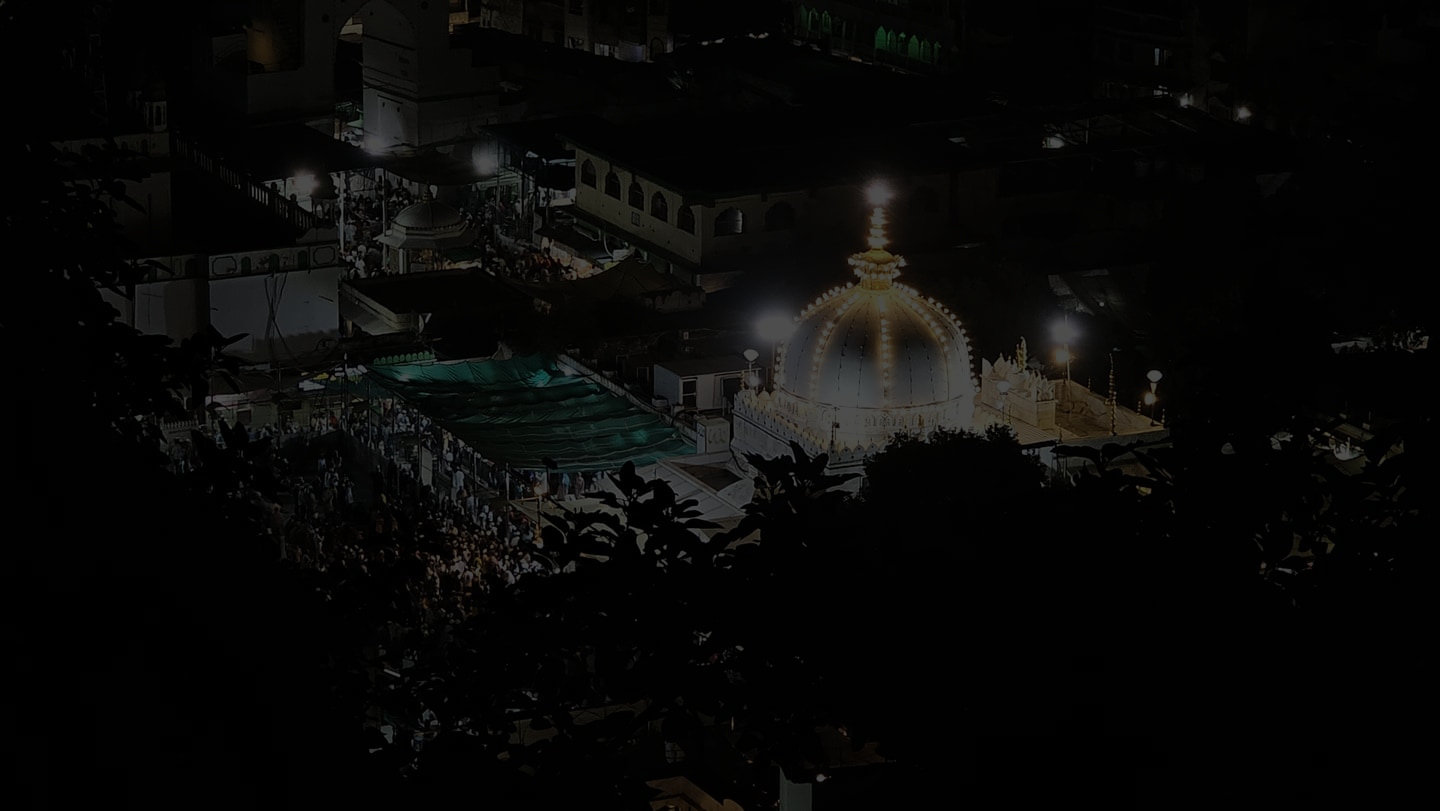
Hazrat Haji Waris Ali Shah (RA), fondly remembered as Sarkar Waris-e-Pak, was a towering Sufi saint of the 19th century whose life and teachings continue to inspire millions across the world. His shrine at Dewa Sharif Dargah in Barabanki, near Lucknow, remains a beacon of spiritual guidance, love, and universal harmony.
Early Life & Lineage
Sarkar Waris-e-Pak (RA) was born on 1st Safar 1228 AH (1819 CE) at Dewa Sharif, located 13 km from Barabanki and around 28–30 km from Lucknow. He descended from a distinguished family of Syeds originally from Nishapur, Iran. His ancestors migrated to India and settled near Barabanki in a place now called Rasoolpur.
His father, Syed Qurban Ali, married Syeda Bibi Sakina (Chandan Bibi), and together they were blessed with the birth of this exceptional soul.
Even before his birth, prophecy heralded his arrival: a revered Dervish foretold that he would be a spiritual guide of global renown, bringing divine love and guidance to all peoples, irrespective of faith or region.
Childhood & Upbringing
Sarkar Waris-e-Pak lost his father at the age of two and his mother at three. He was lovingly nurtured by his grandmother, Janaba Hayathunissa Saheba. From early childhood, his demeanor was extraordinary — calm, contemplative, and patient. He slept little, seldom cried, and would often gaze at the stars in quiet reflection.
Even as a child, he demonstrated profound generosity and detachment from worldly pleasures. He would distribute sweets, clothes, and utensils to the needy, and his early games often reflected charity and kindness.
At age five, he began formal education under a capable tutor. Within two years, he memorized the entire Qur'an under the guidance of his uncle, Hazrat Ameer Ali, becoming a Hafiz. He also mastered Arabic, Persian, and Islamic sciences, showing remarkable intellectual and spiritual maturity.
After the passing of his grandmother, his uncle-in-law, Hazrat Haji Syed Khadim Ali Shah of Lucknow, took charge of his education, under which he gained proficiency in literature, philosophy, and Quranic exegesis. His memory, linguistic ability, and depth of understanding were extraordinary — he could converse fluently in Arabic and Persian, and effortlessly explain complex literary and theological concepts.
Spiritual Journeys & Pilgrimages
In 1838 CE, at the age of 19, Sarkar Waris-e-Pak embarked on his first journey for Hajj, traveling on foot through India to Bombay, and then sailing to Jeddah, before continuing to Makkah and Madinah. He spent fourteen years performing spiritual travels, completing seven to eleven Hajj pilgrimages according to different accounts.
His journeys also included visits to Egypt, Palestine, Aden, and Istanbul, where his teachings attracted disciples and admirers across cultures. He emphasized that the spirit, sincerity, and purity in performing Hajj mattered far more than ritual formalities.
He returned to Dewa Sharif in 1266 AH (1853 CE), continuing to serve as a spiritual guide and mentor to countless devotees.
Teachings & Philosophy
Sarkar Waris-e-Pak's teachings were universal, inclusive, and deeply spiritual:
- Unity of God: "Rab and Ram are one." He taught that God's essence transcends names, forms, and religious divisions.
- Role of the Pir (Spiritual Guide): A true guide is selfless, independent, and lives only for God. He owns nothing, relies on no one but the Divine, and guides disciples with compassion and wisdom.
- Prayer (Namaz): Regular, focused prayer is the nourishment of the soul, a practice of humility, and a direct connection to God.
- Fasting: Beyond ritual, fasting purifies the heart, strengthens discipline, and fosters divine love.
- Zakat & Charity: Giving with sincerity multiplies blessings manifold and nurtures social responsibility.
- Hajj: A test of faith, sincerity, and detachment from worldly attachments.
- Character & Ethics: Avoid greed, envy, ego, and speaking ill of others; embrace humility, patience, and universal respect.
- Interfaith Respect: Mosques and temples reflect the same Divine truth; his teachings encouraged harmony among Muslims, Hindus, Christians, and all seekers of truth.
He instructed disciples to live lives of devotion, service, and detachment from worldly desires. Many of his followers became ascetics or spiritual seekers, inspired by his purity and guidance.
Passing & Urs
Sarkar Waris-e-Pak (RA) departed this world on Friday, 6th April 1905, at around 86 years of age. His Urs (annual commemoration) is celebrated every year during the Karthik Mela at Dewa Sharif, attracting devotees from across India and the world.
Legacy
The Dewa Sharif Dargah remains a vibrant center of spiritual inspiration, welcoming millions irrespective of caste, creed, or religion. Sarkar Waris-e-Pak is revered not only as a guide but as a universal teacher of love, devotion, and humanity.
"The essence of all religions is love for God and service to humanity."