
Subscribe to our Newsletter
Join 10k+ people to get notified about new posts, news and updates.
Do not worry we don't spam!
Join 10k+ people to get notified about new posts, news and updates.
Do not worry we don't spam!

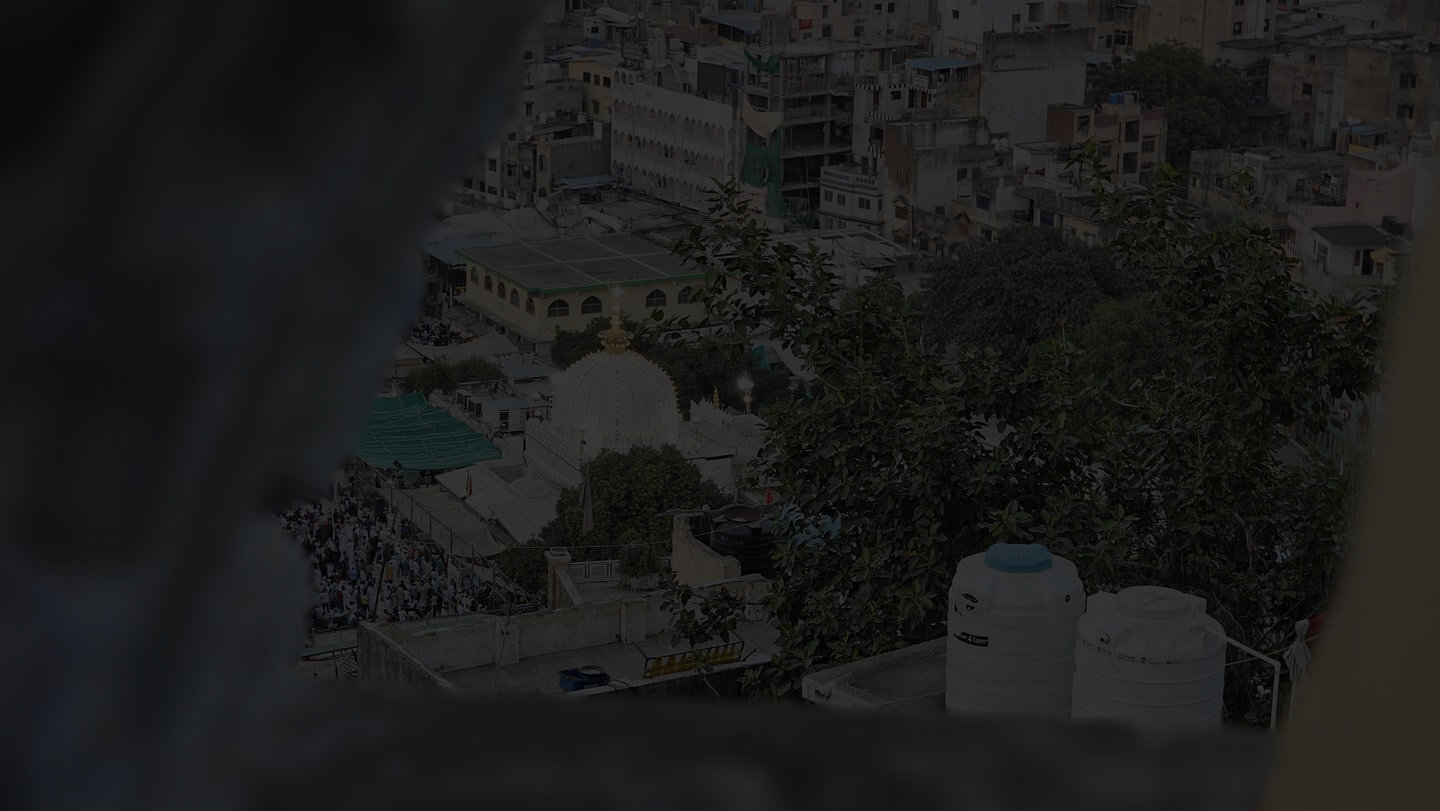
The Path to Allah جل جلاله
The Divine Source of All Mercy
Every step within the courtyards of Ajmer Sharif Dargah whispers one truth: all honour, mercy, and blessing belong to Allah جل جلاله alone . The saints, the Sufis, and the shrine itself are reflections of His mercy, not independent of Him. Khwaja Gharib Nawaz رضي الله عنه himself lived as a servant of Allah, guiding people not to himself but to the Creator.
وَلِلَّهِ مَا فِى ٱلسَّمَـٰوَٰتِ وَمَا فِى ٱلْأَرْضِ ۚ وَكَفَىٰ بِٱللَّهِ وَكِيلًا
“And to Allah belongs whatever is in the heavens and whatever is on the earth. And Allah is sufficient as a Disposer of affairs.”
(Surah An-Nisa, 4:132)
This verse echoes in Ajmer: the grandeur of the Dargah, the devotion of millions, the food of the langar, and the voices of qawwali — all are reminders of the One Divine Reality behind them.
Allah in the Teachings of Khwaja Gharib Nawaz (RA)
Khwaja Sahib’s life was a mirror of Allah’s Names and Attributes. He taught that to love Allah is to love His creation , and to serve Allah is to serve humanity . His famous instruction to his disciples was:
“Be like the river, quenching the thirst of every traveller without asking who they are.”
These metaphors are drawn from the Qur’anic vision of Allah’s mercy, which encompasses all creation. By embodying this, Khwaja Sahib showed that the remembrance of Allah is not confined to prayer rugs and mosques—it extends into kitchens, hospitals, schools, and the streets where people live.
The beating heart of Ajmer is dhikr (remembrance of Allah) . Visitors witness this in many forms:
Qur’an Recitation: Huffaz recite verses daily, filling the atmosphere with the words of Allah.
Collective Supplication: At the time of Fatiha, crowds raise their hands, united in prayer to the Almighty.
Qawwali: The poetry sung in Mehfil Khana is not mere art—it is dhikr in melody, drawing souls toward Allah.
Silent Dhikr: Many pilgrims sit silently near the resting place, repeating Allah, Allah in their hearts, seeking closeness to the Divine.
مَثَلُ الَّذِي يَذْكُرُ رَبَّهُ وَالَّذِي لاَ يَذْكُرُ رَبَّهُ، مَثَلُ الحَيِّ وَالمَيِّتِ
“The example of the one who remembers his Lord and the one who does not remember his Lord is like the living and the dead.”
(Bukhari, Muslim)
Ajmer Sharif lives this hadith daily.
Ajmer is a sanctuary where people of every background gather. This inclusivity reflects the Qur’anic truth:
يَـٰٓأَيُّهَا ٱلنَّاسُ إِنَّا خَلَقْنَـٰكُم مِّن ذَكَرٍۢ وَأُنثَىٰ وَجَعَلْنَـٰكُمْ شُعُوبًۭا وَقَبَآئِلَ لِتَعَارَفُوٓا۟ ۚ إِنَّ أَكْرَمَكُمْ عِندَ ٱللَّهِ أَتْقَىٰكُمْ ۚ إِنَّ ٱللَّهَ عَلِيمٌ خَبِيرٌۭ
“O mankind! We created you from a single male and female, and made you into nations and tribes, so that you may know one another. Verily, the most honoured of you in the sight of Allah is the most righteous of you.”
(Surah Al-Hujurat, 49:13)
In Ajmer, distinctions of religion, caste, and colour dissolve. The beggar and the emperor, the scholar and the labourer, the Muslim and the Hindu, all stand together — not before Khwaja Sahib, but before Allah جل جلاله. The Dargah teaches that the true honour of a person is not in wealth or status, but in their taqwa (God-consciousness) .
The generosity of Ajmer—the langar, the medical aid, the education for children—are all seen as acts of devotion to Allah. Feeding a hungry person is not charity here; it is worship . Giving a widow her stipend is not social service; it is obedience to Allah’s command .
وَأَقِيمُوا۟ ٱلصَّلَوٰةَ وَءَاتُوا۟ ٱلزَّكَوٰةَ ۚ وَمَا تُقَدِّمُوا۟ لِأَنفُسِكُم مِّنْ خَيْرٍۢ تَجِدُوهُ عِندَ ٱللَّهِ ۗ إِنَّ ٱللَّهَ بِمَا تَعْمَلُونَ بَصِيرٌۭ
“And establish prayer and give zakat, and whatever good you put forward for yourselves – you will find it with Allah. Indeed, Allah of what you do, is Seeing.”
(Surah Al-Baqarah, 2:110)
This spirit transforms Ajmer from a shrine into a living verse of the Qur’an.
In today’s world, people search for meaning, direction, and peace. Ajmer Sharif offers a simple reminder: Allah جل جلاله is the answer to every search.
Whether you come with a burden of sins, an illness in your family, or despair in your heart—the solution is not in the saint, but in the Creator to whom the saint always pointed. Khwaja Gharib Nawaz’s role was to remind us: turn to Allah, and He will turn to you.
Ajmer Sharif belongs to Allah, its saint was the servant of Allah, its miracles are from Allah, and its blessings are gifts of Allah. To visit Ajmer is to witness how remembrance of the Divine can transform a city into a sanctuary and strangers into a family.
At the heart of Ajmer Sharif lies the love of the Beloved Prophet Muhammad ﷺ . Khwaja Gharib Nawaz رضي الله عنه did not call people to himself—he called them to the path of the Messenger ﷺ. His teachings, service, and compassion were reflections of the Sunnah. To visit Ajmer is to be reminded of the Prophet ﷺ, whose mercy embraces all creation.
وَمَآ أَرْسَلْنَـٰكَ إِلَّا رَحْمَةًۭ لِّلْعَـٰلَمِينَ
(Surah Al-Anbiya, 21:107)
Ajmer Sharif is a living testimony of this verse. The mercy of the Prophet ﷺ radiated through Khwaja Sahib, turning Ajmer into a sanctuary for the broken, the poor, and the seekers of truth.
History and tradition narrate a sacred moment in the life of Khwaja Gharib Nawaz رضي الله عنه. After his early years of learning and before arriving in India, he journeyed to Madinah Munawwarah , the blessed city of the Prophet ﷺ.
There, in a state of deep devotion, Khwaja Sahib presented himself spiritually at the noble resting place of Rasulullah ﷺ. It is said that in a vision of immense clarity, the Prophet ﷺ honoured him with blessings and gave him a divine mission:
To travel to Hindustan (India).
To spread the message of Islam through love, compassion, and service.
To become a light for the poor and the marginalized.
With these instructions, Khwaja Sahib set his journey towards Ajmer. This encounter in Madinah became the foundation of his entire mission. Ajmer Sharif is thus not an isolated shrine—it is a branch that grows directly from the prophetic garden of Madinah.
Feeding the Hungry: A reflection of the Prophet’s ﷺ habit of never eating alone and always sharing.
Serving the Needy: Inspired by his ﷺ words, “The best of people are those who are most beneficial to others.”
Spreading Peace: Every greeting at Ajmer carries as-salamu ‘alaykum —a direct echo of the Prophet’s ﷺ command to “spread peace among you.”
Hospitality to Strangers: Just as the Prophet ﷺ welcomed every guest, Ajmer Sharif receives pilgrims from across the world without distinction.
The langar khana , the qawwali , the annual Urs , and the daily fatiha are not cultural additions—they are practical expressions of living the Sunnah in service and remembrance.
One of the most sacred features of Ajmer Sharif is the Jannati Darwaza (Gate of Paradise) . This silver door, located inside the shrine complex, is opened only on special occasions: during the Urs of Khwaja Sahib , on Eid al-Fitr , on the 6th of Shawwal (Urs of Khwaja Usman Harooni), and on 10th Dhul-Hijjah .
According to tradition, Khwaja Sahib was blessed by the Prophet ﷺ with the honour that whoever crosses this gate with sincerity during these days will be granted special mercy and nearness to Allah. Pilgrims walk through with folded hands, reciting durood and Qur’an, believing it to be a symbolic passage from worldly life into eternal bliss.
The Jannati Darwaza stands as a physical reminder of the Prophet’s ﷺ mercy , connecting Ajmer’s visitors to the promise of paradise for those who live with love and righteousness.
The qawwali often praises the Prophet ﷺ, weaving together poetry of love and yearning.
On Mawlid (12th Rabi‘ al-Awwal) , Ajmer glows with celebration—lanterns, food for the poor, and gatherings of remembrance honouring the birth of the Messenger ﷺ.
Pilgrims are reminded constantly that the key to Khwaja Sahib’s barakah was his undying love for the Prophet ﷺ .
“Hold firmly to the Sunnah of the Messenger ﷺ, for in it lies success in both worlds.”
The Prophet ﷺ changed hearts in Arabia with kindness, patience, and forgiveness. Khwaja Gharib Nawaz رضي الله عنه carried that same method to Hindustan:
He did not build palaces; he built hearts.
He did not raise armies; he raised communities.
He did not impose; he invited with compassion.
Ajmer became a reflection of Madinah—where the poor are honoured, the sick are cared for, and strangers are embraced. This is why people of every background, even those outside Islam, still revere Khwaja Sahib: because in him they see the fragrance of Muhammad ﷺ.
Ajmer Sharif is not a shrine separate from Islam—it is a sanctuary connected directly to Madinah Munawwarah . The blessings received by Khwaja Gharib Nawaz رضي الله عنه in the presence of the Prophet ﷺ became the seed from which Ajmer’s garden of love blossomed.
The Jannati Darwaza stands as a gate of hope, while the teachings of Khwaja Sahib remind us that the only path to paradise is through following the Messenger ﷺ.
To love Ajmer is to love Khwaja Gharib Nawaz, and to love Khwaja Gharib Nawaz is to love the Prophet Muhammad ﷺ.
The Path to Allah جل جلاله
Islam is more than rituals—it is a way of life founded upon knowledge, faith, and action. The Qur’an was revealed not to create division but to illuminate the path of mercy, justice, and service. At Ajmer Sharif, the five pillars of Islam are not only recited and remembered—they are lived in daily practice. The Dargah stands as a reminder that true faith is measured not by words alone but by the service of humanity and the remembrance of Allah .
Khwaja Gharib Nawaz رضي الله عنه embodied Islam in its most beautiful form. His life in Ajmer was a living example of Qur’an and Sunnah: he taught faith through gentleness, prayer through devotion, alms-giving through generosity, fasting through discipline, and pilgrimage through humility. The following sections highlight how each pillar of Islam connects with the life and atmosphere of Ajmer Sharif.
1. Declaration of Faith (Shahada)
أشهد أن لا إله إلا الله، وأشهد أن محمدًا رسول الله
“I bear witness that there is no god but Allah, and I bear witness that Muhammad is His Messenger.”
This simple yet profound declaration transforms lives. It is both a key and a compass: a key that opens the door to Islam, and a compass that keeps believers oriented toward Allah.
At Ajmer Sharif, the Shahada is not confined to the tongue—it is alive in every act of service. When pilgrims feed the poor, it is because they believe Allah alone is the Provider. When they bow at prayer, it is because they affirm no one else is worthy of worship. When they send blessings upon the Prophet ﷺ, it is because they recognize him as the final Messenger.
“To bear witness that there is no god but Allah means to remove every idol from the heart, whether it is wealth, ego, or power, and to rely only on the Creator.”
“To bear witness that Muhammad is His Messenger means to follow his Sunnah with love and obedience in every matter of life.”
Thus, the Shahada becomes not just a statement but a lifestyle —visible in humility, service, and love.
2. Prayer (Salat)
Prayer is the spiritual heartbeat of Islam . Five times a day, believers are invited to leave behind the world’s distractions and stand before Allah.
وَجُعِلَتْ قُرَّةُ عَيْنِي فِي الصَّلَاةِ
“The coolness of my eyes is in prayer.” (Sunan al-Nasa’i)
The courtyards and masjids—such as the Akbari Masjid and the Shah Jahani Masjid —echo with the adhan (call to prayer) five times daily.
Pilgrims gather shoulder to shoulder, experiencing unity in worship, regardless of caste, race, or language.
The serenity of Fajr prayer at the shrine is especially cherished: as dawn light breaks over the domes, rows of worshippers lift their hearts in devotion.
But prayer at Ajmer is not limited to ritual. The entire atmosphere is an act of prayer. The qawwals singing the praises of Allah and His Messenger ﷺ, the visitors raising hands in du‘a after fateha, the custodians sweeping the courtyards—all are part of a larger rhythm of remembrance.
For Khwaja Sahib, prayer was a lifeline. It is narrated that he would pray long into the night, weeping before his Lord. His commitment to tahajjud (night prayer) was so deep that his disciples saw in him a living example of the Prophet’s ﷺ devotion.
3. Alms-Giving (Zakat and Sadaqah)
Generosity is the soul of Islam. The Qur’an repeatedly commands believers to give, reminding them that wealth is not truly theirs—it is a trust from Allah.
Allah جل جلاله says:
وَأَقِيمُوا۟ ٱلصَّلَوٰةَ وَءَاتُوا۟ ٱلزَّكَوٰةَ ۚ وَمَا تُقَدِّمُوا۟ لِأَنفُسِكُم مِّنْ خَيْرٍۢ تَجِدُوهُ عِندَ ٱللَّهِ ۗ إِنَّ ٱللَّهَ بِمَا تَعْمَلُونَ بَصِيرٌۭ
“Establish prayer and give zakat, and whatever good you put forward for yourselves—you will find it with Allah. Indeed, Allah of what you do, is Seeing.”
(Surah Al-Baqarah, 2:110)
Langar Khana (Community Kitchen): Sponsored by donations, it feeds thousands daily. Rich and poor sit together, sharing the same food.
Badi and Chhoti Degh: Massive cauldrons cook sweet rice, donated by families and communities fulfilling vows ( mannat ). This is a direct act of sadaqah, sustaining bodies and souls.
Stipends for Widows and Orphans: Monthly pensions are distributed to ensure the vulnerable are not neglected.
Education and Medical Relief: Donations are channeled into scholarships, books, medicines, and treatments for those in need.
Khwaja Gharib Nawaz رضي الله عنه himself lived by this principle. Despite being revered, he lived simply, often giving away whatever he had. His generosity was not symbolic; it was life-giving. To this day, Ajmer preserves that tradition of service as worship .
4. Fasting (Sawm)
Fasting is more than abstaining from food—it is a discipline that purifies the heart and strengthens the soul. It teaches patience, gratitude, and empathy for the poor. The Qur’an declares:
يَـٰٓأَيُّهَا ٱلَّذِينَ ءَامَنُوا۟ كُتِبَ عَلَيْكُمُ ٱلصِّيَامُ كَمَا كُتِبَ عَلَى ٱلَّذِينَ مِن قَبْلِكُمْ لَعَلَّكُمْ تَتَّقُونَ
“O you who believe, fasting is prescribed for you as it was prescribed for those before you, that you may attain taqwa (God-consciousness).”
(Surah Al-Baqarah, 2:183)
At Ajmer Sharif, fasting has always been observed with reverence. In the blessed month of Ramadan , the Dargah transforms into a spiritual haven:
Iftar Gatherings: Thousands gather to break their fast together. The langar expands beyond measure, ensuring that no one is left hungry at sunset.
Tarawih Prayers: The mosques within the complex come alive with recitations of the Qur’an during long night prayers.
Night Vigils: Pilgrims and devotees spend the last ten nights in prayer, remembrance, and Qur’an recitation, seeking Laylat al-Qadr—the Night of Power, greater than a thousand months.
Even beyond Ramadan, many devotees keep nafl fasts on Mondays, Thursdays, and blessed days of the Islamic calendar. Khwaja Sahib himself was known for his devotion to fasting, often keeping continuous fasts, breaking them only with simple food, and spending his nights in prayer.
At Ajmer, fasting is not only about personal piety—it is about remembering the hungry of the world and responding with generosity.
5. Pilgrimage (Hajj and Ziyarat)
The fifth pillar of Islam is Hajj , the sacred pilgrimage to Makkah, which is obligatory upon every Muslim who is able to perform it. Nothing can equal the sanctity of the Ka‘bah, the House of Allah, and the rites established by Prophet Ibrahim عليه السلام and revived by Prophet Muhammad ﷺ.
But alongside Hajj, the tradition of ziyarat (visiting the friends of Allah) has also been cherished across centuries. Visiting the Dargah of Khwaja Gharib Nawaz رضي الله عنه in Ajmer is not a replacement for Hajj, but it is considered a journey of love and remembrance that renews faith and softens hearts.
For many Muslims across South Asia and the wider world, Ajmer Sharif is affectionately called the “Ka‘bah of Hindustan.” This does not mean it equals the Ka‘bah, but it expresses the deep attachment and reverence people feel when visiting the shrine. Just as pilgrims at Makkah circle the Ka‘bah, devotees at Ajmer circle the blessed resting place of Khwaja Sahib, offering fatiha and reciting the Qur’an.
إِنَّ لِلَّهِ عِبَادًا اخْتَصَّهُمْ لِحَوَائِجِ النَّاسِ، يَفْزَعُ النَّاسُ إِلَيْهِمْ فِي حَوَائِجِهِمْ، أُولَئِكَ هُمُ الآمِنُونَ مِنْ عَذَابِ اللَّهِ.
“Indeed, Allah has servants whom He has chosen for the fulfillment of people’s needs; people come to them in times of need. They are safe from the punishment of Allah.”
(Al-Tabarani)
Ajmer is seen as such a place—a sanctuary where the broken-hearted gather, where supplications rise, and where the barakah (blessing) of Allah flows through the legacy of His beloved servant, Khwaja Gharib Nawaz (RA).
Islam begins with the Shahada , comes alive in prayer , finds generosity in zakat and sadaqah , strengthens souls through fasting , and connects hearts through pilgrimage . At Ajmer Sharif, all five pillars breathe together, not as rituals alone but as living acts of love and service .
The Shahada is seen in the way people surrender their hearts to Allah.
Prayer fills the courtyards five times a day with unity and devotion.
Alms-giving sustains the poor, the widows, and the travellers.
Fasting nurtures discipline and compassion, especially in Ramadan.
Pilgrimage brings together seekers from around the globe, turning Ajmer into a reflection of unity.
For Khwaja Gharib Nawaz رضي الله عنه, Islam was never about isolation—it was about engagement. His life in Ajmer was proof that when Islam is lived with sincerity, knowledge, and compassion, it transforms societies.
At Ajmer Sharif, Islam is not only taught—it is experienced. It is knowledge in action, faith in service, and devotion in daily life.
أَلَآ إِنَّ أَوْلِيَآءَ ٱللَّهِ لَا خَوْفٌ عَلَيْهِمْ وَلَا هُمْ يَحْزَنُونَ
ٱلَّذِينَ ءَامَنُوا۟ وَكَانُوا۟ يَتَّقُونَ
لَهُمُ ٱلْبُشْرَىٰ فِى ٱلْحَيَوٰةِ ٱلدُّنْيَا وَفِى ٱلْـَٔاخِرَةِ ۚ لَا تَبْدِيلَ لِكَلِمَـٰتِ ٱللَّهِ ۚ ذَٰلِكَ هُوَ ٱلْفَوْزُ ٱلْعَظِيمُ
“Indeed, the friends of Allah—there will be no fear concerning them, nor will they grieve. They are those who believed and were mindful of Allah. For them are glad tidings in this life and in the Hereafter. The words of Allah cannot be changed. That is the supreme triumph.”
(Surah Yunus, 10:62–64)
The Friends of Allah (Awliya) are not worshipped nor given divine status—they are honoured because they reflect Allah’s mercy in the world. Their lives are lanterns that guide humanity. They are known for their humility, service, and constant remembrance of Allah.
In every age, Allah has raised such men and women to remind people of His presence. In India, Hazrat Khwaja Moinuddin Hasan Chishti (RA) stands as one of the greatest saints, whose presence continues to leave a timeless impact.
Islam did not spread in India by the sword or by politics—it spread through the hearts of the Awliya . The Sufi saints embodied the Qur’an and Sunnah, teaching not by force but by kindness.They welcomed people from every walk of life, embracing seekers of all backgrounds with love and compassion. Through their hospitality and compassion, millions embraced Islam voluntarily, seeing in the saints the reflection of the Prophet ﷺ.
The langar tradition , which still continues at Ajmer Sharif, was one of the most powerful means of dawah. Hungry travellers, poor villagers, and seekers of truth were fed, respected, and embraced without discrimination. Seeing such mercy, people recognized the truth of Islam.
The Saint of Ajmer
When Khwaja Moinuddin Hasan Chishti (RA) arrived in Ajmer in the late 12th century, the region was dominated by pride, injustice, and divisions of caste. Instead of confronting rulers with power, he chose to confront hearts with love.
Service to the Poor: He opened his door to beggars, widows, and travellers. His home became a shelter for all.
Compassionate Preaching: He did not impose Islam; he invited with gentleness, quoting Qur’an and speaking with wisdom.
Living Sunnah: His humility, fasting, night prayers, and generosity were so striking that people saw in him a reflection of the Prophet ﷺ.
Langar Tradition: He established communal meals where Muslims and non-Muslims sat together. This broke social barriers and taught equality.
Miracles (Karamat): Many chroniclers narrate that Allah blessed him with miracles—healing the sick, feeding the hungry, and protecting the oppressed—strengthening people’s faith in his truth.
His noble character and radiant example inspired entire communities around Ajmer to turn towards the light of Islam. His disciples—such as Khwaja Qutbuddin Bakhtiyar Kaki (RA), Baba Farid Ganj-e-Shakar (RA), and Khwaja Nizamuddin Auliya (RA)—continued this mission across North India, spreading the Noor far and wide across the land.
The saints transformed Hindustan not with weapons, but with zikr, sama‘, and khidmat (service) . Where there was despair, they brought hope. Where there was hunger, they brought food. Where there was division, they brought unity.
Khwaja Sahib’s impact was so immense that he became known as “Sultan-ul-Hind” (The King of India) , not because he ruled lands but because he ruled hearts. Today, Ajmer Sharif continues as a spiritual capital where people of all faiths still find solace.
The Dargah of Ajmer is not an isolated shrine. It is the heart of a living chain of Awliya:
Khwaja Usman Harooni (RA): The guide who prepared Khwaja Sahib for his mission.
Khwaja Qutbuddin Bakhtiyar Kaki (RA): His successor in Delhi, spreading Islam with compassion.
Baba Farid Ganj-e-Shakar (RA): Whose poetry still sweetens the Punjabi language and hearts.
Khwaja Nizamuddin Auliya (RA): The beloved of Delhi, who carried Ajmer’s spirit into the capital.
Khwaja Banda Nawaz Gesu Daraz (RA): Who spread the Chishti message into the Deccan.
Through this chain, the fragrance of Ajmer reached every corner of India, shaping its spiritual and cultural identity.
The Friends of Allah are the hidden treasures of this world, and Khwaja Gharib Nawaz رضي الله عنه was the crown jewel of Hindustan. Through love, service, and remembrance of Allah, he transformed Ajmer into a beacon of Islam. His legacy continues in every meal served at the langar, in every prayer whispered at the shrine, and in every seeker who comes from across the world.
The saints are not the destination—they are the signposts. They point beyond themselves to Allah جل جلاله, the One Friend of all creation.